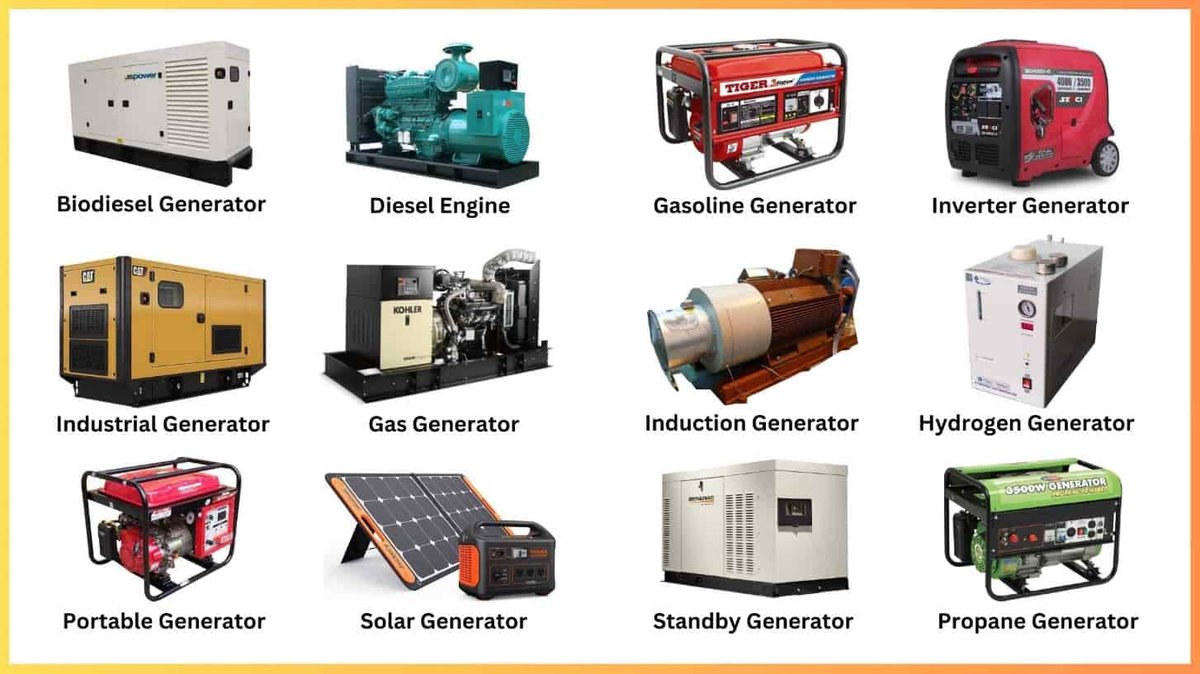
When the lights go out, or you're simply seeking greater energy independence, the thought of a generator often springs to mind. But for many, especially those in apartments, urban homes, or sensitive environments, traditional roaring, fume-spewing generators just aren't an option. That's where the quiet revolution of indoor generators comes in.
This comprehensive guide delves into Understanding Indoor Generators: Types & Functionality, demystifying these essential power solutions. We’ll explore what makes them safe for indoor use, the diverse technologies behind them, and how to choose the perfect one to keep your home running smoothly, no matter what.
At a Glance: Indoor Generators Unpacked
- Designed for Safety: Unlike traditional generators, indoor models produce no toxic fumes (like carbon monoxide) and require no external combustion, making them safe for enclosed spaces.
- Battery-Powered Core: Most indoor generators are essentially large, sophisticated battery systems, often referred to as portable power stations.
- Three Main Types: You’ll primarily encounter Battery-Powered, Solar-Powered (which integrate solar charging with batteries), and the more advanced Fuel Cell varieties.
- Key Benefits: Enjoy peace of mind with reliable backup power, supreme safety, convenient portability, and an environmentally friendlier footprint.
- Sizing is Critical: Matching the generator’s capacity to your specific power needs (wattage and duration) is paramount to avoid disappointment.
- Beyond Emergencies: These versatile units are also perfect for off-grid living, outdoor adventures, and powering remote workspaces.
What Exactly Is an Indoor Generator? (And Why It Matters)
Forget the noisy, gasoline-guzzling machines that need to live outdoors. An indoor generator is a fundamentally different beast. It's engineered from the ground up for safe operation within your home, apartment, or business. The crucial distinction? They don’t rely on internal combustion of fossil fuels like gasoline, propane, or diesel to produce electricity. This means no hazardous fumes like carbon monoxide, no deafening noise, and no cumbersome exhaust systems.
Instead, indoor generators primarily store energy in advanced rechargeable batteries. This makes them exceptionally clean, quiet, and user-friendly. They’ve become a reliable power source for critical appliances during outages, particularly valuable in urban settings or multi-unit dwellings where outdoor generator use is impractical or prohibited. For a deeper dive into these ingenious devices, consider our complete guide to indoor generators.
The Power Trio: Understanding Indoor Generator Types
While the term "indoor generator" might sound singular, it actually encompasses a few distinct technologies, each with its own strengths and ideal applications.
1. Battery-Powered Generators (AKA Portable Power Stations)
This is by far the most common and accessible type of indoor generator. At their heart, these units are robust, rechargeable batteries packaged with an inverter, charging ports, and various output sockets (AC outlets, USB ports, DC ports). They store power and then convert it into usable household electricity.
- How They Work: You simply charge the internal battery (via a wall outlet, car charger, or solar panels), and when needed, plug in your devices. The stored DC (direct current) power is converted into AC (alternating current) for your standard household electronics.
- Key Features:
- Portable: Designed for easy transport, often with handles or wheels.
- Quiet Operation: Virtually silent, making them ideal for indoor use, even overnight.
- Easy to Use: Plug-and-play functionality requires minimal setup or technical knowledge.
- No Fumes: Absolutely no combustion, so zero emissions or carbon monoxide risk.
- Variety of Outputs: From standard AC to USB-C PD, they power a wide range of devices.
- Ideal Uses: Short-term power outages, keeping essential appliances (refrigerators, lights, phone chargers, medical equipment like CPAP machines) running, camping, tailgating, and powering remote workstations. Many high-quality models now feature advanced LiFePO4 batteries, which offer extended lifespans and enhanced safety—a significant leap in latest battery technology.
2. Solar-Powered Generators (Solar Generators)
Often an evolution of battery-powered units, solar generators integrate the ability to charge their built-in batteries directly from solar panels. While the "generator" still refers to the battery unit, the "solar" aspect highlights its renewable charging capability.
- How They Work: The unit contains a battery, an inverter, and a solar charge controller. Solar panels (purchased separately or as part of a kit) convert sunlight into DC electricity, which the charge controller manages before sending it to charge the internal battery.
- Key Features:
- Environmentally Friendly: Harnesses clean, renewable energy from the sun.
- Energy Independence: Reduces reliance on the grid, especially useful for off-grid living or extended outages.
- Low Running Costs: Once the initial investment in panels is made, the "fuel" (sunlight) is free.
- Silent & Fume-Free: Like pure battery generators, they are silent and produce no emissions during operation.
- Ideal Uses: Sunny regions, off-grid cabins, extended power outages where grid power may not return for days, supplementary power for homes, and long-term camping or RVing. They're a cornerstone of robust solar power solutions.
3. Fuel Cell Generators
These are a more advanced, less common, but highly efficient type of indoor generator. Unlike combustion engines, fuel cell generators produce electricity through an electrochemical reaction, typically involving hydrogen or natural gas.
- How They Work: A fuel cell combines a fuel (e.g., hydrogen) and an oxidant (e.g., oxygen from the air) across an electrolyte to produce electricity, water, and heat. The chemical reaction is continuous as long as fuel is supplied.
- Key Features:
- Highly Efficient: Convert fuel directly into electricity with fewer energy losses than combustion.
- Low Emissions: Produce minimal pollutants; hydrogen fuel cells only produce water as a byproduct.
- Continuous Power: Can operate for extended periods as long as fuel is available.
- Quiet Operation: Significantly quieter than traditional combustion generators.
- Ideal Uses: Continuous power applications, residential and commercial settings requiring extended backup without constant recharging (like batteries), and niche applications where clean, reliable, long-duration power is critical. While they don't produce CO from combustion, some fuel types (like natural gas) still require careful handling and ventilation, albeit different from a gas generator.
A Quick Word on "Portable Generators": It's easy to get confused by the term "portable generator." Historically, this referred to gas or propane-fueled generators that could be moved. While some battery-powered units are also called portable generators (or more accurately, portable power stations), it's crucial to remember that traditional gas/propane portable generators are not safe for indoor use due to carbon monoxide risks. Always clarify the fuel source and safety certifications when encountering this term.
Why You Need One: Unpacking the Benefits of Indoor Generators
Beyond just providing power, indoor generators bring a host of advantages that make them a smart investment for modern living.
Uncompromised Safety for Your Home
This is the number one differentiator. Traditional generators burn fuel, creating carbon monoxide – a colorless, odorless, and deadly gas. Indoor generators, being predominantly battery-based or using non-combustion fuel cell technology, eliminate this risk entirely. There are no fumes to worry about, no open flames, and no hot exhaust, making them inherently safer for indoor environments, especially in apartments or homes with children and pets.
Convenience at Your Fingertips
Indoor generators are designed for simplicity. They are compact, often sleek, and require minimal maintenance beyond charging. There's no mixing fuel, no pulling a cord, and no complex setup. Just plug in your devices and go. Their portability means you can easily move them from room to room, take them camping, or use them for DIY projects far from an outlet.
Eco-Friendly Power (Mostly)
With the growing focus on sustainable living, battery and solar-powered indoor generators shine. They significantly reduce reliance on fossil fuels, lowering your carbon footprint. Solar-powered units, in particular, harness a completely renewable energy source, offering true energy independence. Even fuel cell generators, especially those running on hydrogen, boast significantly lower emissions compared to their combustion counterparts.
Reliability When It Matters Most
When the grid goes down, an indoor generator ensures continuity for your essential services. Whether it’s keeping your refrigerator cold, powering critical medical equipment, or simply providing light and connectivity, these devices offer dependable power. This reliability translates directly into peace of mind, knowing you’re prepared for unexpected outages and can maintain a semblance of normalcy. This is a core component of any robust emergency preparedness guide.
Finding Your Perfect Match: Sizing Your Indoor Generator
Choosing the right size indoor generator isn't about guesswork; it's about understanding your power needs. Too small, and you won't power everything you want; too large, and you're overpaying for unused capacity.
The Golden Rule: Calculate Your Needs
The key is to determine two main factors:
- Total Wattage (W): How much power your chosen devices draw at any given moment. This is crucial for matching the generator's output capacity.
- Total Watt-hours (Wh) or Kilowatt-hours (kWh): How much total energy your devices will consume over time. This determines the generator's battery capacity.
Step-by-Step Calculation Guide:
Let's break down the process to ensure you get the right fit:
1. List Your Essential Appliances & Their Wattage
Go through your home and identify the appliances you absolutely cannot live without during an outage. This might include:
- Refrigerator (600-800W running, up to 1200W surge)
- LED Lights (10-20W per bulb)
- Phone/Tablet Charger (5-20W)
- Laptop (50-100W)
- TV (50-200W, depending on size)
- CPAP Machine (30-60W)
- Medical Equipment (check specific ratings)
- Microwave (600-1500W, but only for short bursts)
- Coffee Maker (800-1200W, also short bursts)
- Small Heating/Cooling Unit (1000-1500W)
- Heated Blanket (100-200W)
Action: Look for labels on your appliances for their "running watts" or "rated power." If only amps (A) are listed, multiply amps by voltage (V) to get watts (W = A x V). Add up the running watts of all devices you expect to power simultaneously. This sum is your required output capacity.
2. Estimate Usage Duration & Total Energy
Once you know the wattage of your essential items, consider how long you'll need them to run.
Example:
Let's say your essential simultaneous load is 740W (e.g., a refrigerator at 600W, 4 LED bulbs at 10W each, and a laptop at 100W). If you need this power continuously for 10 hours, you'll need a battery capacity of at least 740W * 10 hours = 7400 Wh, or 7.4 kWh.
Important Note: Generators rarely deliver 100% of their rated battery capacity due to efficiency losses. It’s always wise to add a 20-30% buffer to your calculated Wh requirement. So, for 7.4 kWh, aim for a generator with 9-10 kWh of usable capacity.
3. Consider Expandability
Life changes, and so do power needs. Some indoor generators offer expandable capacity via additional battery packs. This allows you to start with a smaller, more affordable unit and scale up as your requirements grow or your budget allows. This future-proofs your investment.
Real-World Examples: Sizing for Different Lifestyles
To give you a clearer picture, let’s look at typical sizing for various scenarios:
- Basic Needs (Apartment/Small Emergency Kit):
- What it powers: Lighting, phone charging, small electronics (e.g., TV, laptop).
- Capacity Range: 300-500 watts output, 0.5-1 kWh battery capacity.
- Example: A unit like the VTOMAN Jump 600X (299Wh, 600W) is perfect for short-term outages, keeping phones charged and a few lights on.
- Moderate Home Use (Apartment/Small Home):
- What it powers: Refrigerator, lighting, TV, computer, maybe a fan.
- Capacity Range: 1,000-1,500 watts output, 2-3 kWh battery capacity.
- Example: For an apartment, a 1,000W to 2,000W output generator (like the VTOMAN Jump 1000 at 1000W output, 1408Wh) provides a good balance of capability and portability, easily supporting a refrigerator, lights, laptop, and perhaps a small heating/cooling unit.
- Extended Use for Essentials (Larger Home/Critical Needs):
- What it powers: Refrigerator, lighting, essential medical equipment, small kitchen appliances.
- Capacity Range: 1,500-2,500 watts output, 3-5 kWh battery capacity.
- Example: The VTOMAN Jump 1500X (1500W output, 828Wh expandable to 2376Wh) could handle a refrigerator and other crucial items for longer durations, especially with added battery packs.
- Comprehensive Home Coverage (Larger Home/Significant Backup):
- What it powers: Refrigerator, freezer, critical heating/cooling systems, multiple lights, electronics, microwave.
- Capacity Range: 3,000-5,000 watts output, 6-10 kWh battery capacity.
- Example: For powering larger loads including a microwave and fridge during extended outages, a robust unit like the VTOMAN Jump 1800 (1800W output, 1548Wh expandable to 3096Wh) becomes more suitable.
- Whole House with High Power Demands (Serious Backup/Off-Grid):
- What it powers: Multiple large appliances, central heating/cooling systems, power tools, well pumps.
- Capacity Range: Over 5,000 watts output, 10+ kWh battery capacity.
- Example: For demanding applications like small businesses or large homes needing extensive backup, high-capacity models or linking multiple units (if supported) would be required, potentially like the VTOMAN FlashSpeed 1500 (1500W output, 1548Wh expandable to 3096Wh) with its UPS function for critical business environments.
Understanding your needs and carefully calculating your required wattage and watt-hours is the most important step in choosing the right indoor generator. For further guidance, refer to our comprehensive guide on calculating your exact power needs.
Beyond the Watts: Key Considerations Before You Buy
While power output and battery capacity are vital, a truly useful indoor generator has features that enhance safety, usability, and longevity.
Battery Chemistry & Lifespan
Most modern indoor generators use Lithium-ion (Li-ion) batteries. However, within Li-ion, look for LiFePO4 (Lithium Iron Phosphate) batteries.
- Why LiFePO4? They offer superior cycle life (how many times they can be charged and discharged before significant capacity loss – often 3,000+ cycles vs. 500-1000 for traditional Li-ion), enhanced safety (less prone to thermal runaway), and better performance in varying temperatures. This translates to a longer-lasting, more reliable generator.
Charging Flexibility
How will you recharge your indoor generator? Look for multiple charging options:
- Wall Outlet (AC): Standard and fastest for most units. Some models (like the VTOMAN FlashSpeed 1500) boast ultra-fast 1-hour full charges.
- Solar Input: Essential for off-grid or extended outages. Check the maximum solar input (W) to match compatible solar panels.
- Car Charger (DC): Useful for charging on the go.
Output Ports & Features
The more versatile the output, the more useful the generator:
- AC Outlets: Look for Pure Sine Wave inverters, which provide clean, stable power essential for sensitive electronics (laptops, medical devices).
- USB-A & USB-C PD (Power Delivery): Crucial for modern phones, tablets, and laptops.
- DC Ports: For specific DC appliances or car chargers.
- Special Features:
- UPS Function: Uninterruptible Power Supply (UPS) allows the generator to act as a pass-through power source, automatically switching to battery power instantly if the grid fails. Ideal for critical desktops or servers.
- Jump Starter: Some models, like the VTOMAN Jump 600 or Jump 1800, include a car jump starter function, adding another layer of utility for car owners.
- Expandability: As discussed, the option to add extra battery packs is a big plus.
Noise Level
While indoor generators are generally quiet, some cooling fans can produce a slight hum. If you're sensitive to noise, check decibel ratings, especially for models with higher output that might require more aggressive cooling.
Smart Features & Connectivity
Many modern units come with companion apps for monitoring battery status, controlling outputs, and tracking power usage from your smartphone. This adds convenience and insight into your energy consumption.
Keeping It Safe: Essential Tips for Indoor Generator Use
Even though indoor generators are inherently safer than outdoor models, smart practices ensure optimal performance and longevity.
- Placement & Ventilation (Especially for Fuel Cells):
- Battery/Solar: While fume-free, avoid placing them in direct sunlight or confined, unventilated spaces where heat can build up, which can degrade battery life. Ensure proper airflow around the unit.
- Fuel Cell: If you opt for a fuel cell generator that uses fuels like natural gas, proper ventilation is still crucial to dissipate any byproducts or unburnt fuel and prevent buildup. Always follow manufacturer guidelines precisely.
- Storage & Care:
- Battery Maintenance: For battery-based units, store them in a cool, dry place. Most manufacturers recommend charging them to about 80% every 3-6 months to maintain battery health. Avoid extreme temperatures.
- Physical Protection: Keep units away from moisture, dust, and potential impact.
- Understand Your Unit:
- Read the Manual: Always read your generator’s instruction manual thoroughly. It contains critical information on operation, charging, maintenance, and specific safety warnings.
- Overload Protection: Know your generator's maximum output and avoid overloading it. Most units have built-in overload protection that will shut them down, but consistent overloading can cause wear and tear.
- Regular Checks: Periodically inspect your generator for any visible damage, loose connections, or unusual noises.
The Future is Bright: Innovations in Indoor Power
The indoor generator market is rapidly evolving. We're seeing continuous improvements in battery density, allowing for more power in smaller packages. Faster charging technologies are becoming standard, and smart features are making these units more intuitive to manage. The integration of artificial intelligence for optimizing energy usage and seamless smart home integration is on the horizon, promising an even more efficient and user-friendly experience for power security in the years to come.
Your Next Step Towards Power Security
Choosing an indoor generator is a proactive step towards greater peace of mind and energy independence. By understanding the different types, carefully assessing your power needs, and considering key features beyond just watts and watt-hours, you can confidently select a unit that will serve you reliably for years to come.
Whether you're safeguarding against unexpected outages, embracing off-grid adventures, or simply seeking a cleaner, quieter power alternative, the right indoor generator is out there waiting for you. Take the time to research, compare, and invest in a solution that empowers your lifestyle, no matter what challenges the power grid throws your way.